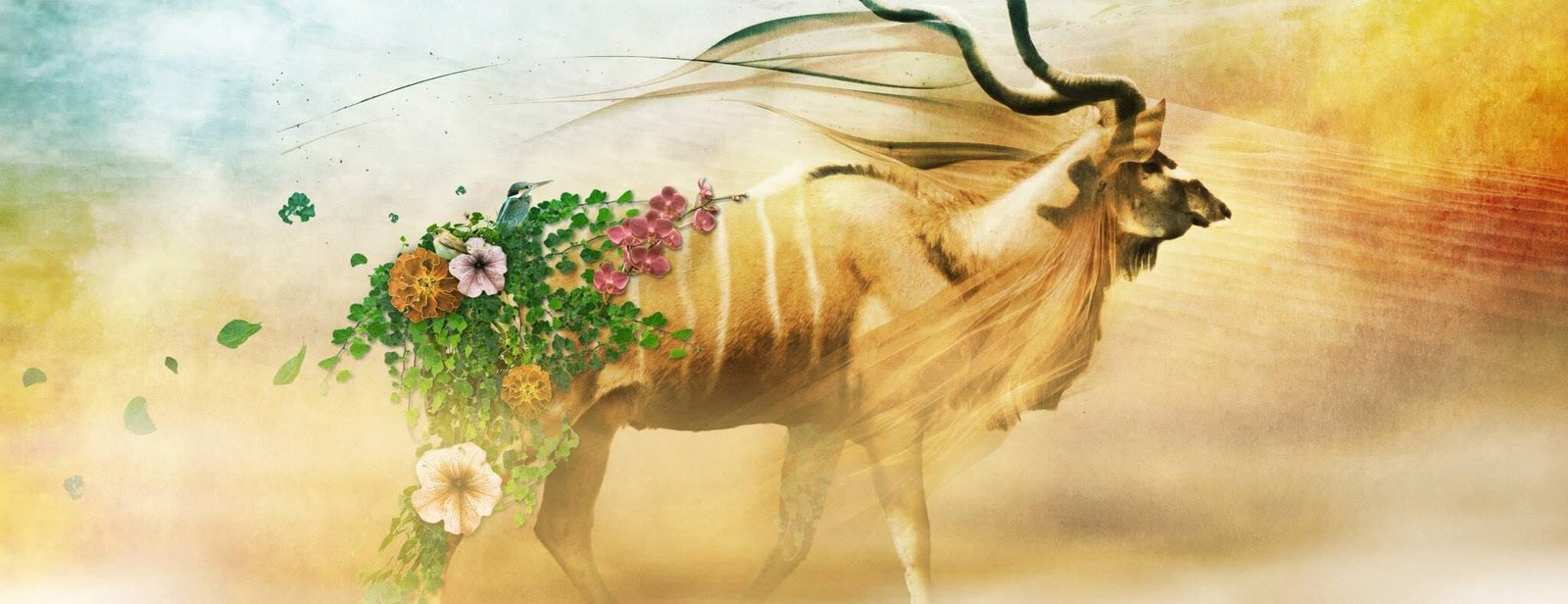
Look, I hate AI slop as much as the next guy – but I guess where I differ compared to many, is that I don’t think everything made by AI is slop by default, and I really don’t mind AI-work as long as it’s good. Nor do I think AI-usage automatically makes something “not man-made”.
To be clear, I’m not making an ethical argument here. It’s certainly worth discussing whether AI, being trained on millions of other peoples art without their explicit permission, is ethically, morally, defensible. Though, I might add, perhaps not as one-sided as some might like to make it – in University, I trained myself on other peoples art as well after all, and the general agreement (and copyright law) is that as long as I don’t publicly share, or commercially sell, those pieces, it’s fine that I learned from them to produce something original and new. Some will agree, some will disagree. Nonetheless, this post isn’t about that aspect, as much as it would be interesting to dive into.
Another objection I want to address up front, is the common “AI uses a lot of water” or “Data centers are horrible” or some variation thereof. Those are fair points, but only in part. AI models like Stable Diffusion run locally on your own computer, no data center required, no massive electricity or water usage. And if you insist on saying “Well, training the model cost a lot of resources!“, well then fair enough, but then I hope you object equally much when someone uses a software from Adobe – after all, a company with hundreds, or thousands, of employees existing for decades certainly drains a lot of resources as well, probably far more so than training most diffusion models.
That’s not to say that data centers and resource usage can’t be problematic, but if you insist on going that route, then I ask that you at least be consistent in your outrage. If your argument against AI art is “it is unreasonably resource demanding compared to much cheaper alternatives”, are you then also writing angry comments to the artist using Blender, saying “you should be making that model in clay, you electricity-stealing monster!“? I somehow doubt that. Maybe worth thinking about. But again, a topic to dive into in further depth another time.
Instead, I want to talk about the idea that anything touched by AI, is therefor automatically no longer man-made, and can never be considered “Art”.
“Slop” may be more easily defined as mass produced, badly made, generic, and slightly “uncanny vally”-esque. While that may be how some, or even many, people describe it, it has also become quite common to see arguments such as “All AI is slop” or “If AI was involved, it’s slop” or “AI generated images can never be art“. What I want to talk about isn’t merely that boring, badly generated, generic AI imagery is, well, boring and generic. That’s quite obvious. But it’s about the notion that any use of AI, in any artistic endeavour, is automatically “slop”, almost by the definition of slop itself, never “art”.
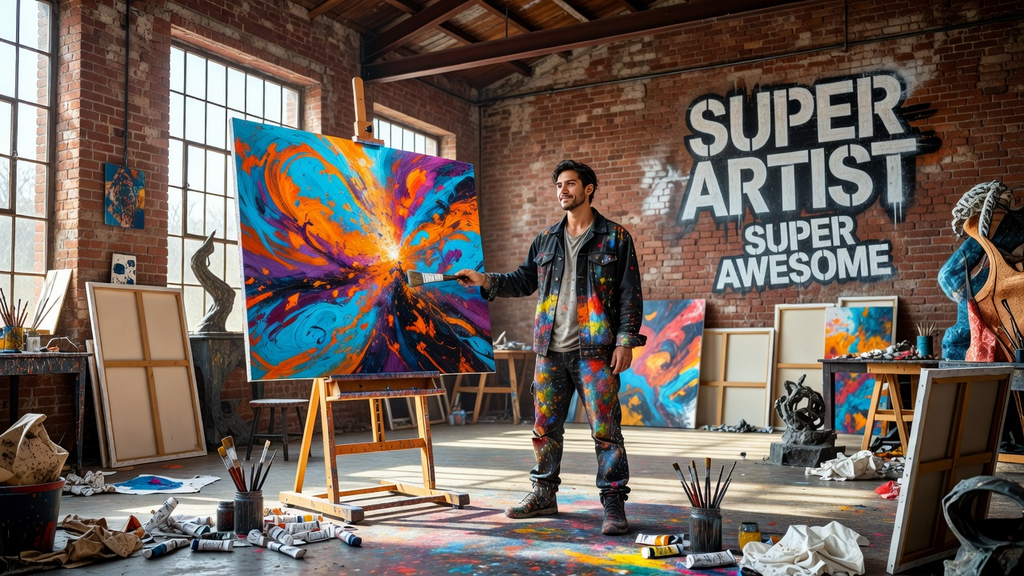
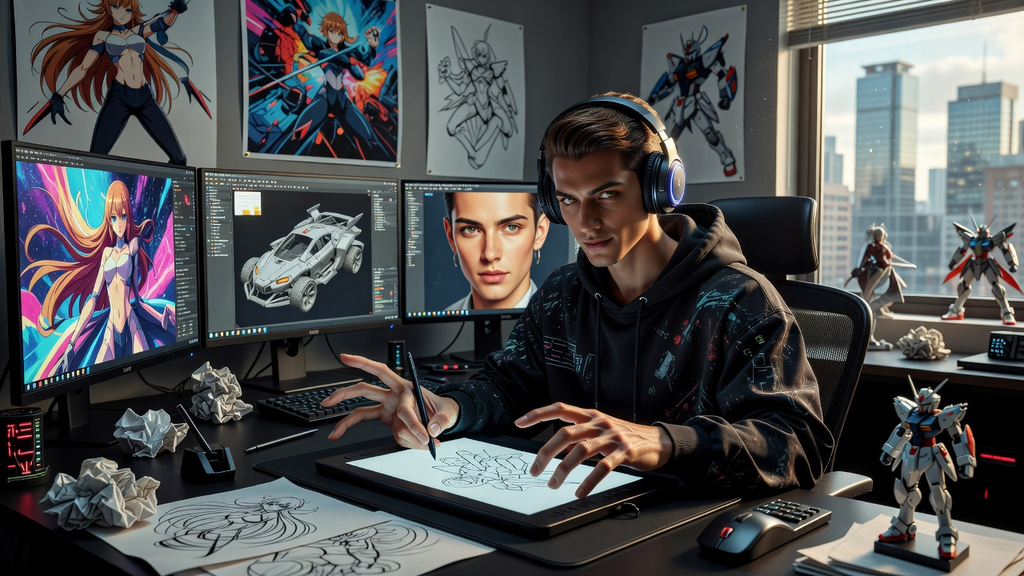
↑ The most “AI Slop” images I could produce!
If I jump into Photoshop, I can slap on a ton of cheap looking effects onto an image easily and fast. It’ll look cheesy. It’ll look like Slop. Does that mean all work made in Photoshop is “slop”, or does it just mean I used Photoshop in a suboptimal way? I would argue it’s the latter.
If someone uses Gemini, GPT, Grok Imagine, etc., and give it a lazy prompt, no reference images, no style preferences, and just uses whatever it spits out by default – yes, that’ll probably look like slop. It’ll look generic, it’ll look lazy. But I don’t think that’s because everything AI makes automatically HAS to look like generic, lazy slop. I think it would look like slop, because I used a tool in a lazy, generic way.
That is, of course, not even touching on the fact that programs such as Automatic1111, or the even more complicated ComfyUI, allows for far more customization of the final look. Not only would the person be using their specifically chosen Checkpoints (the overall image model), they would then also be using LoRAs (mini-models aimed at replicating specific things, people, styles, etc.), and they would then be setting up the workflow in detail.
Perhaps they would use ControlNet to generate based on depth maps or specific postures. Perhaps they would have a self-looping workflow in ComfyUI that essentially generates dozens of images, each time improving or changing a certain part, before creating the actual final output. In these cases, it’s not uncommon for people to spend hours just on setting up everything with the exact settings they want – hardly so different than people messing around with the settings in Blender or Houdini.
“It’s not real art” I hear you say, “the AI just made it, you just told it to” I see you writing. And yes, in some cases that may be true, but in many cases, I don’t agree with those statements.
If someone uses Blender, a software for creating 3D models, does that mean that they didn’t create a model because the computer did all the hard mathematical calculations for them?
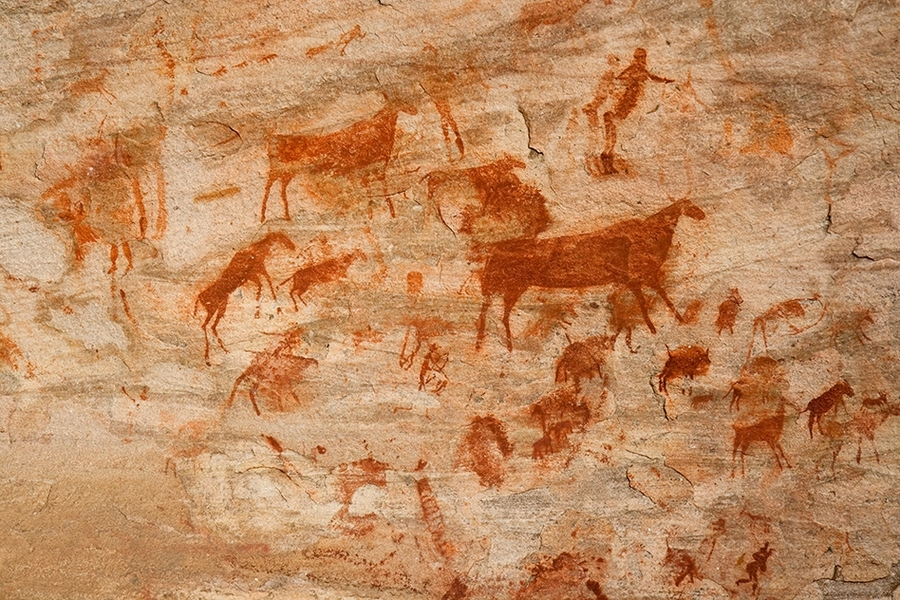
↑ Caveman paintings. Source.
If someone uses Houdini to generate smoke or fire or any other effect for a movie, does that mean that the person didn’t create the effect, because they used a software to simulate it all, instead of going outside and setting fire to something while recording it on a greenscreen?
If someone makes a video game in Unreal Engine, does that mean the video game is automatically slop, automatically “just made by the computer”, that it’s “not real art”, because the developer didn’t sit and code every part of the game engine themselves?
See, I started working with digital art and design almost 30 years ago, as a wee teen when I was around 14 years old, that’s around 28 years ago, and I’ve heard the “it’s not real art” at this point many many times in my life. I think most people complaining about AI “not being real art” or “not actually being made by you”, are just people who are young enough that they grew up in a world, where software like Photoshop was already accepted.
I got my Bachelors at The Danish Design School, and my Masters at The Royal Danish Academy of Fine Arts. Through both my Bachelors and Masters, I was continually told that I would “need to learn to make real things“, or terms like “you’re good at the computer stuff, but you need to be able to make real art“.
When people say “The AI made that, you didn’t” they skip over the enormous of amount of things software like Photoshop does automatically for you.
Simply the act of working with “Layers” in Photoshop used to be a learned skill just over 20 years ago. Before digital art and design became common, working with layers, in the real physical world, was a skill that you honed over many years. You would need to learn to think about how you would break something up, then need to learn the correct printing methods for printing it out on transparent plastic, then layer those on top of each other – and that’s not even going into how difficult it would be to produce such things at scale.
Or did you think “I’ll scan it and print it out”? Because scanners are doing that part automatically for you too now, whereas 30 years ago essentially no commercially available scanner existed that could even scan large posters in the first place.
I was told that what I was doing on a computer didn’t count as real art, because “you can just press Undo”, and the act of being able to Undo a mistake meant that what I was making didn’t “count as real”.
But what about the “real” artists, the traditional painters, the sculptors, what about them? Well, did they make the paint themselves? Did they make their own brushes? Did they make their own paper? Did they carve out the rock from a mountainside themselves? Because a person 1500 years ago may think what we paint or sculpt now is impressive, but might equally look at it and think “yeah, sure, but that’s just because you have those tools that does everything for you!“
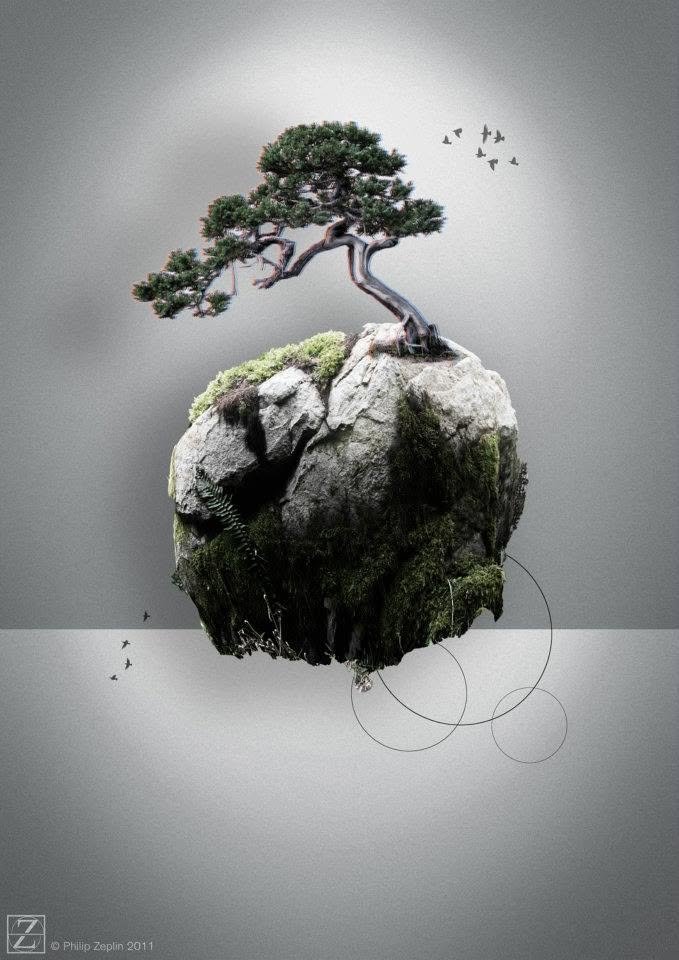

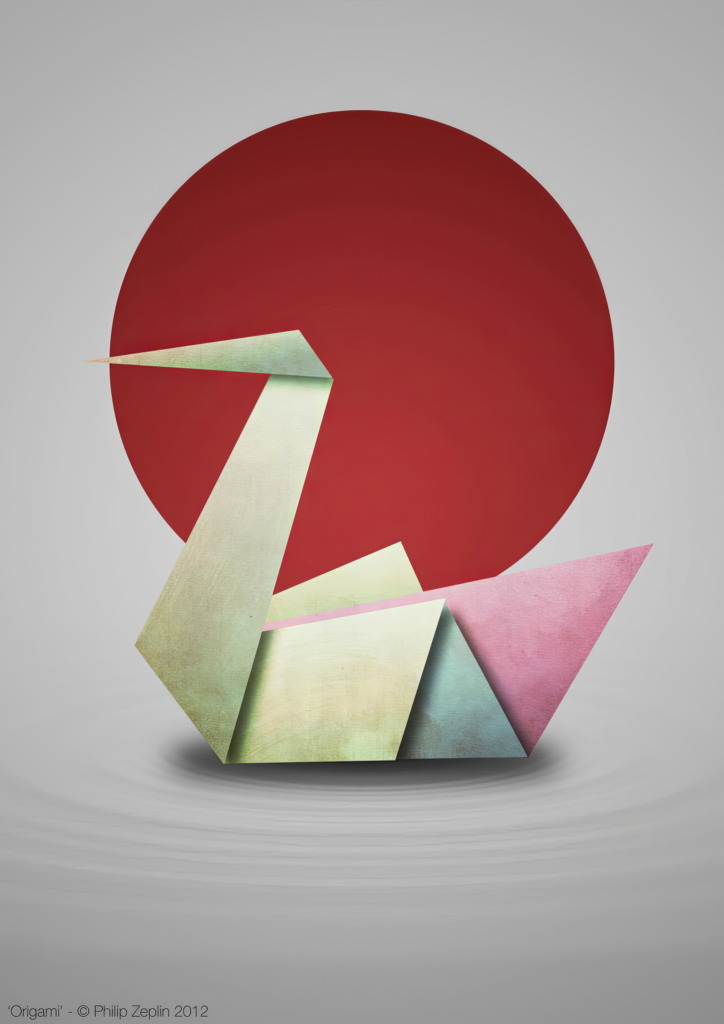
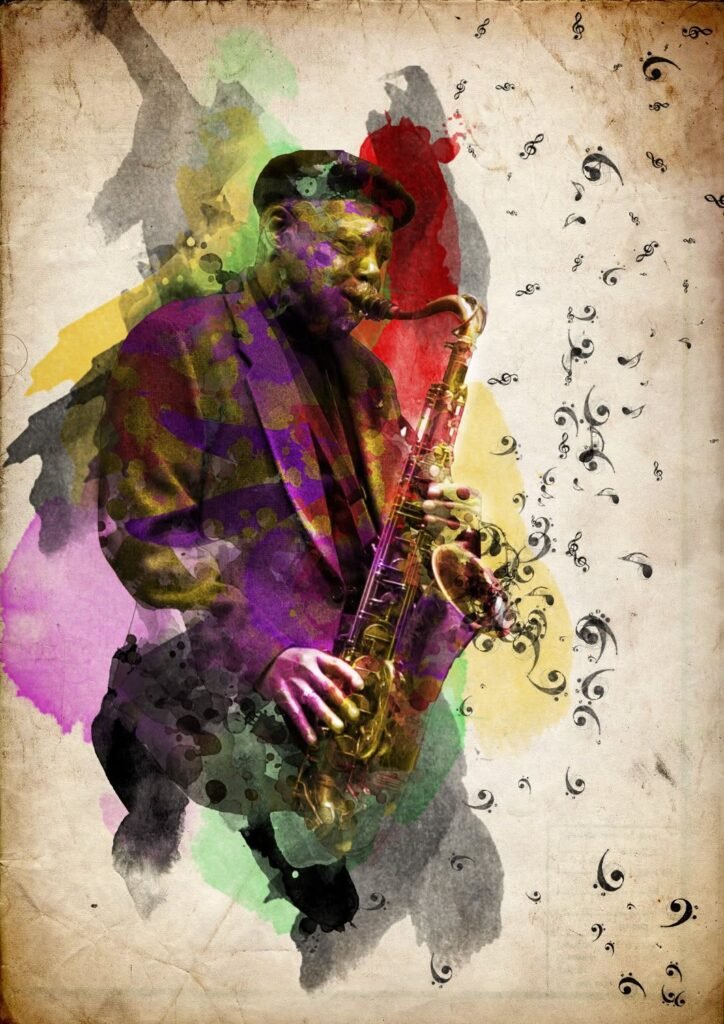
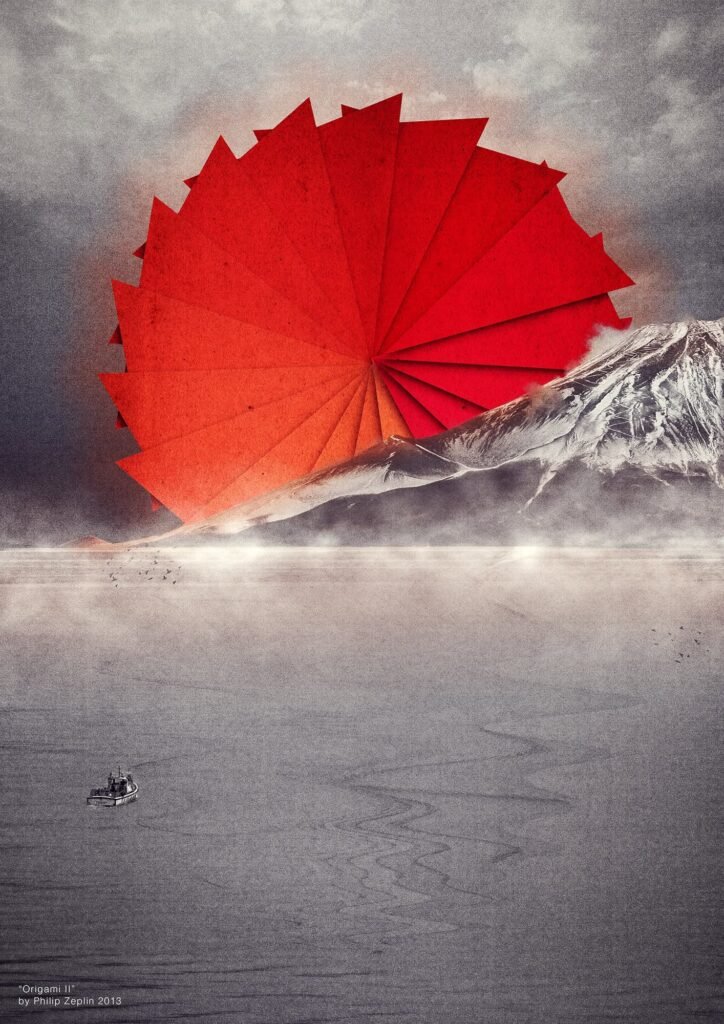
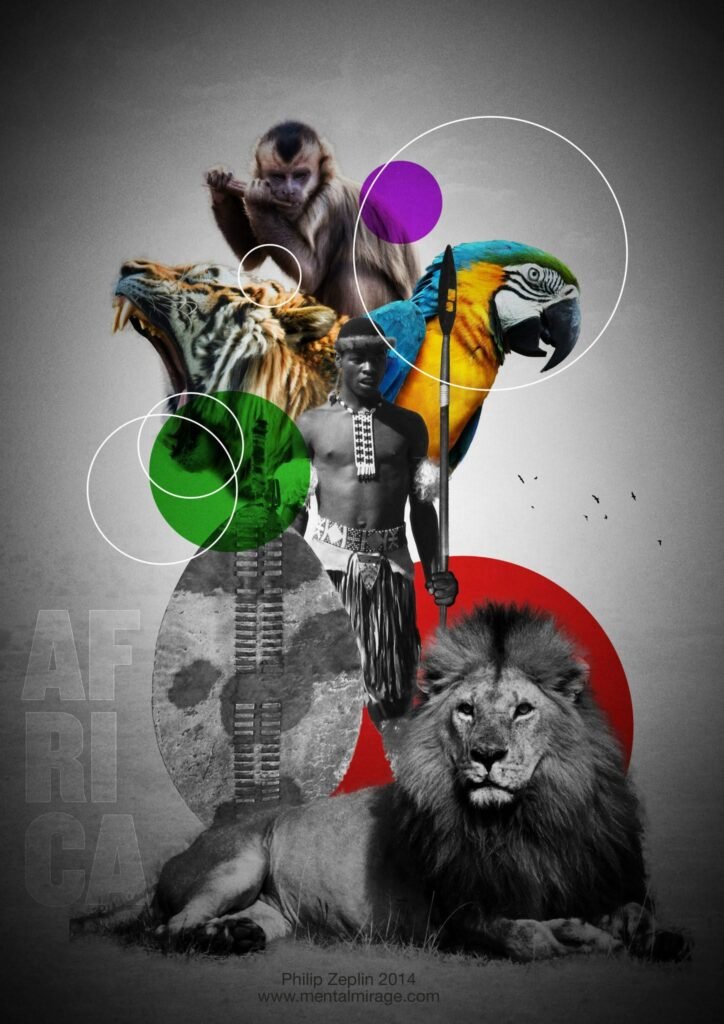
↑ Some of the posters I’ve made, without AI, throughout the years.
“But unlike old tools, modern AI makes creative decisions for you!” I hear you say. But so does every other modern tool, you have just become so used to them, you no longer think about it. When you open up Photoshop, the program has already made a wealth of decisions on your behalf, that will fundamentally change how you go about creating whatever it is you’re about to – a blank white canvas, resolutions, a flat surface, a rectangular surface, preset fonts, ready made filters, and much more. That’s a fundamentally different starting point than someone painting on a jagged cave wall, and will result in fundamentally different outcomes – all, in this case, decided ahead of time by the computer.
“But modern AI just does it for you, it means authorship belongs to it, not you!” you might argue. My counterpoint to would be that the caveman looking at your 43 layers in Photoshop, stacked with automated filters, layer modes, and masks would say the same to you.
Does that mean that I think that everything made by AI should automatically be considered “art” or that anyone prompting Gemini for an image should be considered “artists”? No, that would be stretching it. If someone opened Photoshop and ran a Photoshop Action they had bought on an image, I wouldn’t call that person “An Artist” either. So of course, there’s degrees to this.
But does that mean AI can’t be used in a process to create art? No I don’t think so. If someone downloads a Photoshop Action, runs it on a photo from a stock website, and gets a final picture with a cool effect, I wouldn’t call that person an artist, and I would be hard pressed to call the final image “art” – though I suppose that’s debatable.
But no one would then say “So anything where Photoshop is used is by default not real Art” – that would be absurd. Likewise, I think whether AI generated imagery can be considered “art” depends entirely on how it’s used, not the tool itself.
Would I call the person who ran the Photoshop Action an Artist? No. Would I call a person who pasted a simple prompt into an image generator an “Artist”? Also no.
But what if a person deliberately generated hundreds of AI slop images, intentionally, and made a large exhibition showcasing and contrasting how modern technology has made the mass-production of low-effort imagery not only easy, but has also created a new genre of “probabilistic generic averageness” that shows an almost default form of human art, and how that will impact our self view in the future – well, I think I would still call that an “art exhibition” and that person “an artist”, even though it would be fair to say that almost every single piece showed would be AI-generated.
If I took a single photograph of an Ikea teacup, I doubt most people would call me an artist, nor call neither the teacup or the photograph “art”. But if I took 500 photographs of Ikea teacups and blended them together in a 5×10 meter collage, what then? Suddenly, I think most peoples statement would change.
What about using AI generated art, and then further refining it yourself – whether it be digitally, or with traditional media? Again, I think it’s a spectrum, and the people stating flatly “if you used AI, it’s not yours, and it’s slop” as an ultimate truth are just flat out wrong. I think that, because I got told the same things, for the same reasons, until the technology became common and attitudes changed.
I would, at least generally, agree that simply prompting an image generator and claiming its output as yours is a wee bit shady. Much like telling someone else to take a photograph a specific way, doesn’t make you yourself a photographer. But if you take that image and refine it, work on it yourself, combine it with other images, effects – well, then I think that line starts to wash away.
I think whether something is “slop” or not, and whether something is “just made by the computer”, is less about the tool, and more about how someone chooses to use those tools.
What is “art”, who is an “artist”, those are questions people have been discussing not just for years or decades, but for centuries. Van Gogh was famously unpopular, and only ever sold a single painting in his lifetime – now we consider him one of the greatest painters to have ever lived.
Or the ever so funny examples of using children’s drawings and setting them up in a fancy art gallery, but without saying who made them – and suddenly they’re called modern art. Or what about Maurizio Cattelan and his banana?
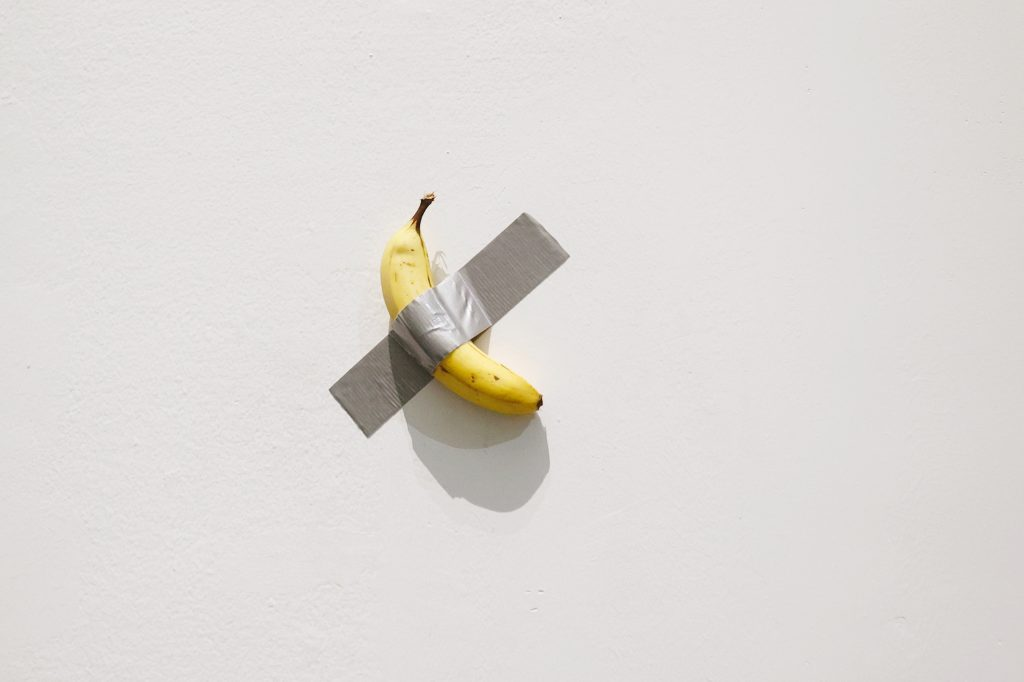
↑ The Comedian by Maurizio Cattelan
Art, design, it’s not a singular thing. A banana by itself isn’t art – but in context, it can be.
So if I have a point, I think that it is this: art and design exist on a curve, on a spectrum. What is art, and who is an artist, is almost always subjective to the individual, and the criteria differs from person to person. Something can be disqualified individually, but be qualified in context. And the medium used to create the art, the tools, can play a role in that – but be careful saying that using specific tools, means that the end product can never be art, because surely the Neanderthal fingerpainting in his cave would look at you using Photoshop or Blender and think “that screen is just doing it all for him” as well.
Leave a comment